IN JOY
  • Home
  • work
    • monoprints
    • Dye manipulations
    • silk
    • quilts
    • etcera
    • Photography
    • graphics & ads
    • Exhibts and Reviews
  • worship
    • Worship spaces >
      • Worship Spaces >
        • Advent & Christmas
        • Framebending Faith
        • Salt Covenant
        • Seven Last Words
        • Brunswick Lenten Prayer Garden
      • Stoles
      • Banners
    • Words for Growing >
      • Family Bread Project
      • Thanksgiving Conversation starters with scripture
      • Road Map: a 6 Session interactive guide to Sharon Ringe & Fred Tiffany's, “Biblical Interpretation: A Road Map.”
      • Living the Net: Bible Studies for 2 settings
    • Luke's Nativity lessons and carols >
      • Graduation prayers
      • New Year Prayers
      • Genesis One for Many Voices
      • Calling Us Back to the Table
    • God Talk: Sermons
  • In Joy blog thoughts

“Aflame on Holy Ground”

8/31/2014

0 Comments

 
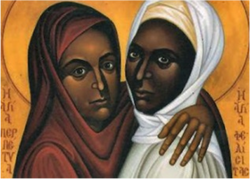
Picture


Exodus 3 &4
 Matthew 16:21-28 


Moses has been born when a king was declaring, “kill all the male Hebrew babies;” the infant hidden by his resourceful mother in the bullrushes of the Nile river, adopted by one of the king’s own daughters, and raised in a household of the ruling class became a man between 2 peoples.

At some level his Hebrew identity endured. Moses' "hebrewness" broke out into the open in rage when one day he saw Hebrew construction workers being whipped by their boss pushing them beyond the limits of their capacity.  Moses promptly, if not intentionally, killed siad boss, forcing him to flee Egypt, to leave behind the peoples he lived between, Hebrew and Egyptian.

Scroll forward a bit and we find Moses married into a Midianite family, shepherding his father in law’s sheep.  On this day, a new day …. he led his flock beyond the wilderness, and came to Horeb, the mountain of God. There the angel of the LORD appeared to him in a flame of fire out of a bush; he looked, and the bush was blazing, yet it was not consumed.

Put yourself on that mountain.
Close your eyes. Set aside the seeing for a moment.

What do you hear?

         Crackling sparks

         Baaing lambs

         Grazing, shuffling sheep

         Perhaps a hawk's wing or call

         Wind

         silence


 "Moses, Moses!"   God called to him out of the bush,
 And he said, "Here I am."
Then God said, "Come no closer! Remove the sandals from your feet, for the place on which you are standing is holy ground."
…."I am the God of your father, the God of Abraham, the God of Isaac, and the God of Jacob."  And Moses hid his face, for he was afraid.

Moses says: I am here.
God says:         I am God.

…. the LORD said,  “I have heard my people’s cry …..and I have come down to deliver them….. and to bring them up out of that land to a land flowing with milk and honey
The cry of the Israelites has now come to me…..

This story began when GOD heard.  It continues as Moses is compelled by what he hears and sees, and perhaps by a readiness to hear that is trying to bubble up in him.

 So come, I will send you to Pharaoh to bring my people, the Israelites, out of Egypt."
But Moses said to God, "Who am I that I should go to Pharaoh, and bring the Israelites out of Egypt?"

This story began when GOD heard.
But it almost ended with Moses’ answer! "Who am I?"

I’m nobody, I disappeared from Egypt; my escape clause is only good if I’m out of sight, out of mind.

(touch finger to nose) Not ME, God!

[But] God said, "I will be with you;
and this shall be the sign for you that it is I who sent you:
when you have brought the people out of Egypt,
you shall worship God on this mountain."

Then the question and answer session begins.  
God tries to light the fire in Moses’ heart while Moses keeps clicking back questions.

Who am I?
Who are You?
What if they don’t believe me (remember, I’m safely nobody)
What if they ask me who you are (remember, I don’t know who you are!)
What if I can’t find the right words?

It reminds me of a stuck lighter.  
Click.  Click. Click…..will this thing ever light or won’t it?

Who are you, who am I, listening to this story today?
         -Nobody (not me)?
         -or somebody with their heart ready to be set flame?

Like Peter in Matthew’s story this morning, Moses tries to throw up a shield he can hide behind. Do you remember how Jesus answered Peter?

…you are setting your mind not on divine things but on human things…..if you want to save your life you must lose it, for me sake.


Jesus' words must have terrified Peter.
What do you think Moses was afraid of?
What about you?
Are you firing back empty clicks or open to God’s igniting flame?

We see the flickers in such unexpected places.

One of our United Methodist Pastors, Rev Cecil Williams, eulogized Robin Williams 2 weeks ago. [1]  Since then the stories just keep coming. These are from Facebook.

‪Tina Pasquinzo we in SF knew what a great guy he was, he would always stop at a school car wash, ask the students what school are they from, what are they raising money for? then would pull out his wallet and tell the kids, "Sorry I don't have time to get my car washed but this is all the money I have in my wallet, good luck and study hard" or when he found out a neighborhood public school needed audio equipment for their run down auditorium, he quietly funded a top of the line sound system.

‪Lindsay Rogers I met robin Williams a few years back after a tragic accident where I almost lost my life due to a drunk driver, I had a torn aerota and a fractured skull along with many other injuries and health problems, well I am still suffering 3 years later and it's hard for me to get out of the house and one of my friends knew how much I loved robin Williams and said Lindsay I have a suprise for you, I wasn't feeling well but they came and kidnapped me.. We didn't have enough money to go and see the show but the gentleman told us that we might have a chance of catching him after his show, so while waiting for the show to end I was talking to one of the security guards who was asking me about my scars and couldn't believe my story and how lucky I was to have made it thru, anyways he goes excuse me I'll be right back.. A few minuets later a lady came out and said mister robin Williams would love to meet you, me and all of my friends look around like me? So I got to go in the building and meet him!! He was such a great guy, he said tell me more about your story he sat down we talked and he said don't ever be ashamed of your scars they are battle wounds and shows how strong you are, they turn into stars and you will shine so bright. I'll never forget that. ……. He kept in contact with me to see how my health was, so this hit close to home with me when I found out about his death. God bless you robin Williams.

‪Anthony Murcia I met Robin Williams when I was a security guard at Metreon in San Francisco. I was escorting a homeless man out of the building and the homeless man told me, "all I want it a chance to work here." I told him look there are a few things you need to do first. Get cleaned up, shave, and find something decent to wear and I will put you in contact with HR. Then I heard a voice say, "is that true?" I turned around and it was Robin Williams. I was amazed and star struck. I said, "yes it is, if goes up there like that they won't take him serious." The next day the man came back and all cleaned up with a nice suit. I prepped him for HR and walked him up there. I never confirmed if Robin helped him but I am sure he did. A few weeks went by and I was working and heard, "hey Tony." I turned around and it was Robin. Robin said, "that was a nice thing you did, thank you." From that point on we carried conversation not as a fan to actor but as friends. He always used my name. I eventually moved on from that job and didn't see him anymore but it was an experience I will remember for

The rest of my life. If I can help a homeless person I will. Robin told me, "it's not how Much you give or what you give they just want to feel like someone still cares." Great man, makes you feel comfortable, and he was just one of the guys. Thank you Robin Williams.


Maybe Robin Wiliams had a heart aflame that lost its source of air.
Certainly he's now in the care of a God who heard and saw the tenderness in his life. 

Pastor Steve Garnaas Holmes reflected this week:

…….And God goes about God's passionate work:                                             
 to deliver, to set us free from oppression, from fear, from death,          

from all that holds back our love from its freedom.
                           

No matter your struggles, your gifts, your hopes,
                                    
there is this great energy of deliverance 
moving in this world,                           
 already at work to set you free, you and all who hope,                            
who suffer, who are oppressed, who long for freedom,                            
for peace, for the arms of the One who Hears.


And you, what burning bush have you seen?
                                             
What work are you doing, what energy are you following?                  

How have you taken up your cross and followed
                                    
the One who knows our pain, the one who hears,                                     

the One who delivers[2]

Its been said that “The church doesn’t have a mission, God’s mission has a church.”

The Christian walk doesn’t start with projects or principles,                            it starts with being present.  “I am here,” so that we can hear God, “I am God…..so come”

Try this listening practice this week. Just as Moses says: I am here, and God says:         I am your God, Say to God, "Here I am," (just that, nothing more than "here I am), and listen for God's response, "I am your God."

The Christian walk doesn’t end with fear or excuses.  
It journeys into wilderness and comes out more alive than when it went it.

“So come” all you who are not nobodies, 
all you somebodies with hearts ready to be set aflame.

Are you ready to hear?
Are you ready to see?
Are you ready for  heart aflame and a bold purpose to your life?


[1] http://www.ktvu.com/videos/news/robin-williams-rev-cecil-williams-remembers/vCnB5h/


[2] ?
-Steve Garnaas Holmes, Unfolding Light 8-30-14


0 Comments
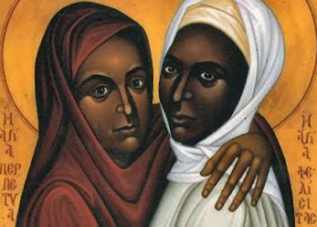
Kings and Midwives

8/24/2014

0 Comments

 
Picture
In 2011, when Journalist James Foley was held captive for 44 days by forces loyal to 
Moammar Gadhafi in Libya, he prayed while imprisoned that his family, many miles away, would somehow know that he was safe.

“Haven’t you felt my prayers?” Foley asked his mother, Diane, when he was finally allowed to call home. She responded that his friends and family had been praying, too, holding vigils filled with former professors, priests and Marquette students.

She echoed his question back: Have you felt ours?

He had, the journalist said. “Maybe it was others’ prayers strengthening me, keeping me afloat,” Foley later wrote.

In 2012, the 40 year old Catholic was abducted again, this time by the extremist group ISIS, which calls itself the Islamic State and which has chosen an ends justify the means approach to creating a warped vision of the Ummah, or Islamic community. 

On Tuesday of this week, James Foley was killed.

The man who killed him, said that Foley’s murder was payback for U.S. airstrikes that have helped drive ISIS from strategic cities and infrastructure in northern Iraq.

Journalist Daniel Burke writes, The man in orange, kneeling. The man in black, wielding a knife. One asked God to cross the “cosmic reach of the universe” and soothe his family.  The other claimed to kill in the "name of Allah, the most gracious, the most merciful." …..the contrast between the two religious paths - one led a journalist to cover conflicts, the other a jihadist to create them - is jarring. [1]

Martin Marty, one of our most insightful living religious historians, observed,
 "It's story versus story…and the more you are threatened, the more dramatic and deep the story is going to be."

In our stories, faith easily becomes an excuse for human goals. 
ISIS has bombed revered religious sites, murdered hundreds and tortured and enslaved many others – all in the name of building an Islamic state. (Burke)

But faith can also be the reality check that provokes acts of kindness and campassion that reknit broken bonds.

Foley's friends and family say his faith inspired a very different moral course. He organized fundraisers for slain journalists, taught convicts in Chicago to read, and risked his life to tell the stories of people living under the brutal rule of dictators. He was the kind of guy who always offered half his sandwick or cigarette, one friend recalled.  The source of his unselfishness was clear, said Foley’s friends. "Jim's faith was something we all agreed not to discuss publicly while he was held in Syria,”
said Max Fisher, “but it was the wellspring of his generosity."

It’s a paradox of modern life - most of human history, actually –
that saints and sinners alike draw from …. religious waters. (Burke)

"It's story versus story," as Marty put it, "and you get rid of the bad ones by telling good ones."

 Exodus 1: 8-2:10 is just such a “story vs. story.”

Now a new king arose over Egypt, who did not know Joseph.

There's been a change in political leadership.  With change is the danger or forgetting, forgetting lessons learned, forgetting friendships forged, forgetting what brought hope and life in the past.

He said to his people, "Look, the Israelite people are more numerous and more powerful than we.  Come, let us deal shrewdly with them, or they will increase and, in the event of war, join our enemies and fight against us and escape from the land."

The king is conflicted, afraid they’ll fight us and afraid they’ll leave. 
What do the Egyptians need these Israelites for anyway?
         Are they a reminder that the ones who were here first are superior?
         Is it because we, oops-the Egyptians, need someone to exercise power over?

Therefore they set taskmasters over them to oppress them with forced labor. They built supply cities, Pithom and Rameses, for Pharaoh.


Are the Israelites needed to drive the economic engine but with their power        
firmly kept in check?  It looks like defensive action, although no assault has taken place. What choice does the king have?

So far this story reminds me of the run up to WWII in Europe.

But the more they were oppressed, the more they multiplied and spread, 
so that the Egyptians came to dread the Israelites.

Is this story starting to sound like the one playing out in the streets with yong black men? 

The Egyptians became ruthless in imposing tasks on the Israelites,
and made their lives bitter with hard service in mortar and brick and in every kind of field labor. They were ruthless in all the tasks that they imposed on them.
 The king of Egypt said to the Hebrew midwives, one of whom was named Shiphrah and the other Puah, "When you act as midwives to the Hebrew women, and see them on the birthstool, if it is a boy, kill him; but if it is a girl, she shall live."

But the midwives feared God; they did not do as the king of Egypt commanded them, but they let the boys live. So the king of Egypt summoned the midwives and said to them, "Why have you done this, and allowed the boys to live?" The midwives said to Pharaoh, "Because the Hebrew women are not like the Egyptian women; for they are vigorous and give birth before the midwife comes to them." 

The story's words so far have been oppress, dread, ruthless, imposed, bitter, kill.
The words start to change when two new characters come on the scene.  Its a pivotal moment. They herd the king but did not obey.  To whom do the midwives owe the truth?  With clarity in this moment comes salvation.  They owe the truth to the one who give life, not the one who oppresses it. 

So God dealt well with the midwives; and the people multiplied and became very strong.  And because the midwives feared God, he gave them families. Then Pharaoh commanded all his people, "Every boy that is born to the Hebrews you shall throw into the Nile, but you shall let every girl live."

“Story vs. story.” 
One is a story of imploding control.  
One a story of expansive hope.
Both contain an element of fear.

Not only, who is feared, but also the quality of fear.  

The king fears his neighbors with a dread that surfaces his own lack of security.
The midwives fear God with an awe that inspires.

It looks like a clear cut case of the power of life vs the power of death.   I would love to hear Carl Jung's take on the story.  There is an element of archetypal male/female power. The male cannot give birth, but that doesn't mean that death is what male power is meant to be about, its archetypal purpose is to protect and sustain.  But this king mistakes his power.

The power of the midwives was assisting life and and assisting death, two movements of the Spirit through such similar portals into what is unknown before crossing. 
The king tries to force them into a warped choice of life or death. 

Friends, we are kings or midwives to each other.
    We are able to protect and sustain each other.
     We are able to accompany and assist each other on our life journeys and passages.
      We are able to the defensive fear that threatens life or the awesome hope that bears life.

It was the king’s choice.
It was the midwives’ choice.
It is our choice. 
What story do you want to be part of?

  The midwives fit Pat Farrell’s description of  “Weeds of Hope”
……in the face of all evidence to the contrary. Hope makes us attentive to signs of the in-breaking of the Reign of God. Jesus describes that coming reign in the parable of the mustard seed…. Though it can also be cultivated, mustard is an invasive plant, essentially a weed…. We can, indeed, live in joyful hope because there is no political or ecclesiastical herbicide that can wipe out the movement of God’s Spirit. Our hope is in the absolutely uncontainable power of God. We who pledge our lives to a radical following of Jesus can expect to be seen as pesky weeds that need to be fenced in. If the weeds of God’s Reign are stomped out in one place they will crop up in another. ( 2012 LCWR Assembly Address)

0 Comments

Kings And MidWives

8/24/2014

0 Comments

 
Picture
Exodus 1: 8-2:10

In 2011, when Journalist James Foley was held captive for 44 days by forces loyal toMoammar Gadhafi in Libya, he prayed while imprisoned that his family, many miles away, would somehow know he was safe.

“Haven’t you felt my prayers?” Foley asked his mother, Diane, when he was finally allowed to call home. She responded that his friends and family had been praying, too, holding vigils filled with former professors, priests and Marquette students. She echoed his question back: Have you felt ours?

He had, the journalist said. “Maybe it was others’ prayers strengthening me, keeping me afloat,” Foley later wrote.

In 2012, the 40 year old Catholic was abducted again, this time by the extremist group ISIS, which calls itself the Islamic State and which has chosen an "ends justifies the means" approach to creating a warped vision of the Ummah, or Islamic community. 

On Tuesday of this week, James Foley was killed. The ISIS militant responsible said Foley’s murder was payback for U.S. airstrikes that have helped drive ISIS from strategic cities and infrastructure in northern Iraq.

Journalist Daniel Burke wrote, The man in orange, kneeling. The man in black, wielding a knife.  One asked God to cross the “cosmic reach of the universe” and soothe his family. The other claimed to kill in the "name of Allah, the most gracious, the most merciful."

…..the contrast between the two religious paths - one led a journalist to cover conflicts, the other a jihadist to create them - is jarring. [1]

Martin Marty, one of our most insightful living religious historians, observed,
"It's story versus story…and the more you are threatened, the more dramatic and deep the story is going to be."

(Burke) It should be said, and repeated often, that the contrast is not between Christianity and Islam. No faith teaches people to massacre innocents, and the vast majority of those being massacred are Muslim.

Faith becomes an excuse for human goals. 

(Burke) ISIS has bombed revered religious sites, murdered hundreds and tortured and enslaved many others – all in the name of building an Islamic state.

Foley's friends and family say his faith inspired a very different moral course.
He organized fundraisers for slain journalists, taught convicts in Chicago to read, and risked his life to tell the stories of people living under the brutal rule of dictators.

He was the kind of guy who always offered half his sandwich or cigarette, one friend recalled.  He was mensch, if such can be said of a Catholic from New Hampshire. The source of his unselfishness was clear, said Foley’s friends. "Jim's faith was something we all agreed not to discuss publicly while he was held in Syria,” said Max Fisher, a journalist at Vox.com, “but it was the wellspring of his generosity."

It’s a paradox of modern life - most of human history, actually –
that saints and sinners alike draw from …. religious waters.

"It's story versus story," as Marty put it, "and you get rid of the bad ones by telling good ones."

Our reading from Exodus this morning is just such a “story vs. story.”

Now a new king arose over Egypt, who did not know Joseph.

The Middle East of Moses' day had change in political leadership, forgetting what brought hope and life in the past.

He said to his people, "Look, the Israelite people are more numerous and more powerful than we.

The king is afraid

Come, let us deal shrewdly with them, or they will increase and, in the event of war, join our enemies and fight against us and escape from the land."

The King is strangely Conflicted-afraid they’ll fight us and afraid they’ll leave. 

What do we need them for?
         Is it to remind us of our superiority?
         Because we need someone to exercise power over?
         Economic reliance? (a situation created by the King’s choices.)

The King feels an urgent need for defensive action. Will he fight or flee? What choice does the king have?

Therefore they set taskmasters over them to oppress them with forced labor. They built supply cities, Pithom and Rameses, for Pharaoh.

Does anyone else find this reminiscent of the prelude to WWII?

But the more they were oppressed, the more they multiplied and spread, so that the Egyptians came to dread the Israelites.

Does anyone else find this reminiscent of western slavery?
 Or-attitudes toward young black men today.

The Egyptians became ruthless in imposing tasks on the Israelites,

and made their lives bitter with hard service in mortar and brick and in every kind of field labor. They were ruthless in all the tasks that they imposed on them.

 The king of Egypt said to the Hebrew midwives, one of whom was named Shiphrah and the other Puah, "When you act as midwives to the Hebrew women, and see them on the birthstool, if it is a boy, kill him; but if it is a girl, she shall live."

But the midwives feared God; they did not do as the king of Egypt commanded them, but they let the boys live. So the king of Egypt summoned the midwives and said to them, "Why have you done this, and allowed the boys to live?"

The midwives said to Pharaoh, "Because the Hebrew women are not like the Egyptian women; for they are vigorous and give birth before the midwife comes to them." 

To whom do the midwives owe the truth?


So God dealt well with the midwives; and the people multiplied and became very strong.  And because the midwives feared God, he gave them families. Then Pharaoh commanded all his people, "Every boy that is born to the Hebrews you shall throw into the Nile, but you shall let every girl live."


“Story vs. story,” one a story of imploding control one a story of expansive hope.

Both contain an element of fear.

Not only, who do you fear, but also quality of fear. 

Defense vs awe.

Power of king in this story is death,

There is an element of Jungian Male/female

 The male power cannot give birth, its purpose is to protect and sustain.

Power of midwives-choice of life or death.

Similarity of birthing and dying-close to the source,

We are kings or midwives to each other.

         Protect and sustain?

         Accompany journey of birth, death?


FEAR or HOPE

It was the king’s choice.

It was the midwives’ choice.

  The midwives fit Pat Farrell’s description of  “Weeds of Hope”

……in the face of all evidence to the contrary. Hope makes us attentive to signs of the in-breaking of the Reign of God. Jesus describes that coming reign in the parable of the mustard seed….

Though it can also be cultivated, mustard is an invasive plant, essentially a weed…. We can, indeed, live in joyful hope because there is no political or ecclesiastical herbicide that can wipe out the movement of God’s Spirit. Our hope is in the absolutely uncontainable power of God. We who pledge our lives to a radical following of Jesus can expect to be seen as pesky weeds that need to be fenced in. If the weeds of God’s Reign are stomped out in one place they will crop up in another.[2]


[1] Daniel Burke, CNN Belief Blog editor, August 20, 2014, http://religion.blogs.cnn.com/2014/08/20/james-foleys-prayers-and-the-dark-side-of-faith/


[2] Pat Farrell OSF, 2012 LCWR Assembly Address


0 Comments

Out of Joint

8/4/2014

0 Comments

 
Picture
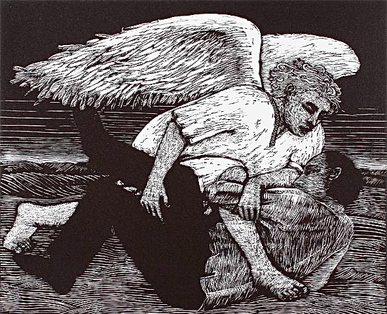
Genesis 32:22-31 

The same night he got up and took his two wives, his two maids, and his eleven children, and crossed the ford of the Jabbok. He took them and sent them across the stream, and likewise everything that he had.

 Jacob was left alone; 


Jacob is a man between tribes, out of the mix of his wives’ family, out of the mix of his own family. After years starting a family under his devious father in law's authority, he’s headed back to the home where he himself betrayed his brother.  
Where does he belong?  
Who is he in this tenuous in-between-space?

Our own “tribes” have changed over the years. 
Who are we when the groups we name ourselves by change?

Is your tribe our workplace?
If you’re a 50 year “company man”  who worked up the ladder earning pension points you’re more likely to say yes than if you’re a self-directed entrepreneur, or serial job holder, gathering skills and reinventing your professional identity as you go.  Or if you’re just trying to get by on what jobs you can find. 
Do you work from home instead of in a shared work space?  
Do you work multiple jobs by choice or by necessity?  
The career tribes don’t look like they did 20-30 years ago.

Is your family your tribe? 
“Yes” is more likely if they live close by.  
It takes more work if brothers, sisters, grandparents and cousins live all over the globe pursuing individual goals.

Is my sports team my tribe? 
Is it my Union, my Veteran’s group, my church, my school?
What name burns brightest in my heart?

Modern interpretations of Jacob’s story have tended toward the psychological:  Jacob’s internal wrestling with fear, with whether he can really go home again, with whom he can trust, with identity.

The biblical storyteller doesn’t have a psychological frame of reference in the modern sense. This is Jacob wrestling with something, someone, beyond himself. 

 ........and a man wrestled with him until daybreak. When the man saw that he did       not prevail against Jacob, he struck him on the hip socket; and Jacob's hip was put out of joint as he wrestled with him. Then he said, "Let me go, for the day is breaking." But Jacob said, "I will not let you go, unless you bless me."

It sounds like two kids testing each other’s mettle on the playground, doesn't it? Not in a slugfest, but a strangely evenly matched game of strength.  If I were even arm-wrestling with God I’d expect to be thrown over in the first half second!  Its kind of frightening to think of holding my own in a struggle with God.  “I will not let you go until you bless me” Jacob said.  God tests Jacob's strength to its limit, and at the limit, Jacob has the strength of mind to say, "bless me." 

In the struggle, Jacob’s hip is knocked out of joint.
I guess it could have been from tossing and turning in a bad dream.  
But he’s left limping in the morning. 
These days, its’ more often a nose that’s out of joint, isnt it? 

 So he said to him, "What is your name?" And he said, "Jacob."
Then the man said, "You shall no longer be called Jacob, but Israel, for you have striven with God and with humans, and have prevailed." Then Jacob asked him, "Please tell me your name." But he said, "Why is it that you ask my name?" And there he blessed him.

So Jacob called the place Peniel, saying, "For I have seen God face to face, and yet my life is preserved." The sun rose upon him as he passed Penuel, limping because of his hip.

I think this wrestling match is about God saying, “remember me?” 
When we remember God, we remember who we are.  
It’s the only way to getour pieces back in place.

Think about the world’s struggles right now, 
the movement of peoples, 
the struggles of the human “tribe” for identity.  

What difference might it make if we had a big button, like that red Staples “easy button," but even bigger, maybe rainbow colored, 
a button marked “Sabbath,” 
And what if when we pushed it, everything stopped for a day 
and we had nothing to do but remember our creator, even if that meant wrestling with God?

Remembering God is remembering that God is greater than the struggles;
that our creator holds possibility at the center of every struggle where opportunity is embedded, where confusion can become clarity, where crisis can yield to Christ consciousness.

The Rev. Juan Guerrero, Ph.D., is superintendent of the United Methodist Mission in Honduras. Last week he sent word of the challenges in Honduras, challenges that are pressing on our own U.S. borders. 

 A fellow United Methodist in Ciudad España had to sell his house to pay a network of smugglers who kidnapped one of his children. When the boy was released, he described how another boy was killed in his presence while his parents were on the phone, to intimidate them .... 

Now when Jesus heard [of John the Baptist's death], he withdrew from there in a boat to a deserted place by himself.
                                                     -The Gospel According to Matthew 14: 13
In the 19th century in Honduras, the term "banana republic" was born because the Americans in the late 18th century installed banana plantations....And until today the owners of the best lands are American banana and small Honduran elites living in the U.S. and exploiting the land renter mentality, in order to get resources, without reinvesting in the country.

In the 19th century, the U.S. Embassy in Honduras was next to the largest gold mine in the Americas, in San Juancito. People wonder why the embassy was away from the capital city and next to a gold mine. Simple: because there were American corporations that exploited these mines. Honduras is poor because the wealth of this country was taken and not reinvested here.

....Today, the largest source of dollars entering the country is by way of remittances from undocumented immigrants living in the United States. In economic terms, the poor who migrate are today the greatest wealth of Honduras, because the U.S. needs cheap labor to harvest crops and construct buildings. 


 But when the crowds heard it, they followed him on foot from the towns. When he went ashore, he saw a great crowd; and he had compassion for them and cured their sick. When it was evening, the disciples came to him and said, "This is a deserted place, and the hour is now late; send the crowds away so that they may go into the villages and buy food for themselves." 
                                                         -The Gospel According to Matthew 14: 14-15

Why don't those people just stay and work to rebuild their own economy?

According to the United Nations, Honduras has the highest homicide rate in the world. This violence is the phenomenon of gangs, which are highly organized. Gangs weave networks through several cities and countries, and are fueled by drug trafficking. Most of the cocaine consumed in the U.S. passes through Honduras. Mexican drug cartels collect the drug in Honduras, mainly from Colombia.

Jesus said to them, "They need not go away; you give them something to eat." They replied, "We have nothing here but five loaves and two fish."
And he said, "Bring them here to me." -Matthew 14: 16-18

 The crowds followed Jesus because that is where they saw hope. 
Why are children and families risking so much to come to us?

* Honduran gangs provide "security" for the drug cartels. Children are recruited by gangs in high-risk urban neighborhoods, who find in the gangs a family of "blood" covenant. Children living with hunger and without opportunities suddenly feel strong and powerful when they belong to a gang..... the drugs consumed in the United States leave a trail of pain and death throughout the Central American triangle......70% of Honduran migrant children, who have been arrested in the last year in the U.S., come from violence-hit areas. 

*The kids go because their parents live in the U.S., and they leave Honduras because there are no opportunities, no dignity. They leave because here there is hunger, violence and poverty....  
 

…… And all ate and were filled; and they took up what was left over of the broken pieces, twelve baskets full……And those who ate were about five thousand men, besides women and children.
                                                  -The Gospel According to Matthew 14: 19-20

This is the good news of Jesus Christ according to Rev. Guerrero:
We have 19 congregations across Honduras and an attendance each week of more than  2,000 people. About 500 volunteers from the U.S. visit our mission each year.  Through these volunteers in mission and their work of our communities, we have not only built temples and parsonages but also now offer programs such as community kitchens for more than 200 children, scholarships for more than 1,000 children, water purification systems, rural projects of planting corn and many medical and dental clinics. We have never had any security problems with groups visiting us, and we were able to serve the poor with all our strength.

This year, 2014, we started the first United Methodist school in Honduras. We started with 230 children, many of whom have parents living in the United States. But we have also had to close day cares for poor children in high-risk communities because of lack of resources. We also have closed soup kitchens because of lack of resources. We had to close clinics in our churches because of lack of resources. We always want to do more.

Its a hard story to listen to.  
And its not a finished story, is it? 
When we hear a story, a door opens for us to enter the story. 

How do we claim our name and our tribe as Christ followers?
There are some concrete realities we can stop avoiding:

    *Do something about drug addiction in our own country. 
      Do I know someone who could use some support?

  *Tend to the edge of our economy, where our desire, no our demand, to get      
    something as close to nothing as possible creates rifts for desparate  
    people to stream in.  
    What am I willing to pay for what I really want or need?

     *Learn to meet strangers as neighbors. 

     *Get real about how much we need, and how it is produced. 

     *Celebrate  the tribe that is our faith family, knowing that our real name is
      "God's people," not "Take what we can get" 

      *Participate in the ways our church is reaching broken communities with 
        real resources supported by our offering and our prayer. 


We can walk around with our noses out of joint, or we can mix it up with God.  Jacob through his wrestling match a stronger and wiser person, and so can we. 

The commentary on Honduras was submitted to United Methodist News Service by retired Bishop Elías G. Galván, the assigned bishop to the Honduras mission.
 See more at: http://um-insight.net/issues-section/why-honduran-children-are/#sthash.eUyZ3yaw.dpuf


Picture
0 Comments
    Picture

    Karen L Munson

    United Methodist Pastor & Liturgical Artist

    Archives

    September 2015
    August 2015
    February 2015
    August 2014
    July 2014
    June 2014
    May 2014
    April 2014
    December 2013
    November 2013
    October 2013
    September 2013
    August 2013
    July 2013
    June 2013
    April 2013

    Categories

    All
    Bible
    Easter
    Healing
    If Then
    Kings 17
    Loss Of A Child
    Luke 10
    Luke 17: 11-19
    Luke 18: 9-14
    Luke 7
    Martha Mary
    Matthew 28
    Proverbs
    Reformation Sunday
    Wisdom Of Friendship

    RSS Feed

  • Home
  • work
    • monoprints
    • Dye manipulations
    • silk
    • quilts
    • etcera
    • Photography
    • graphics & ads
    • Exhibts and Reviews
  • worship
    • Worship spaces >
      • Worship Spaces >
        • Advent & Christmas
        • Framebending Faith
        • Salt Covenant
        • Seven Last Words
        • Brunswick Lenten Prayer Garden
      • Stoles
      • Banners
    • Words for Growing >
      • Family Bread Project
      • Thanksgiving Conversation starters with scripture
      • Road Map: a 6 Session interactive guide to Sharon Ringe & Fred Tiffany's, “Biblical Interpretation: A Road Map.”
      • Living the Net: Bible Studies for 2 settings
    • Luke's Nativity lessons and carols >
      • Graduation prayers
      • New Year Prayers
      • Genesis One for Many Voices
      • Calling Us Back to the Table
    • God Talk: Sermons
  • In Joy blog thoughts